What R-22 Means for Your AC — and Your Wallet
A straight answer to a question we hear all the time.
If your air conditioner was put in before around 2010, there's a good chance it runs on R-22 refrigerant — the stuff most folks still call Freon. That single fact changes how we think about your system, and it's the reason a routine service call on an older unit is worth taking seriously here in Dunnellon and Ocala.
Here's the short version: R-22 has been phased out. Since January 2020, it's no longer produced or imported in the United States. The only R-22 left is what's already sitting in supply. When a bucket of something can't be refilled, the price climbs — and R-22 has. So the same leak that used to be a cheap top-off is now a real expense, and it keeps getting worse each season.
How to Tell If You're Running R-22
You don't have to guess. A few quick ways to find out:
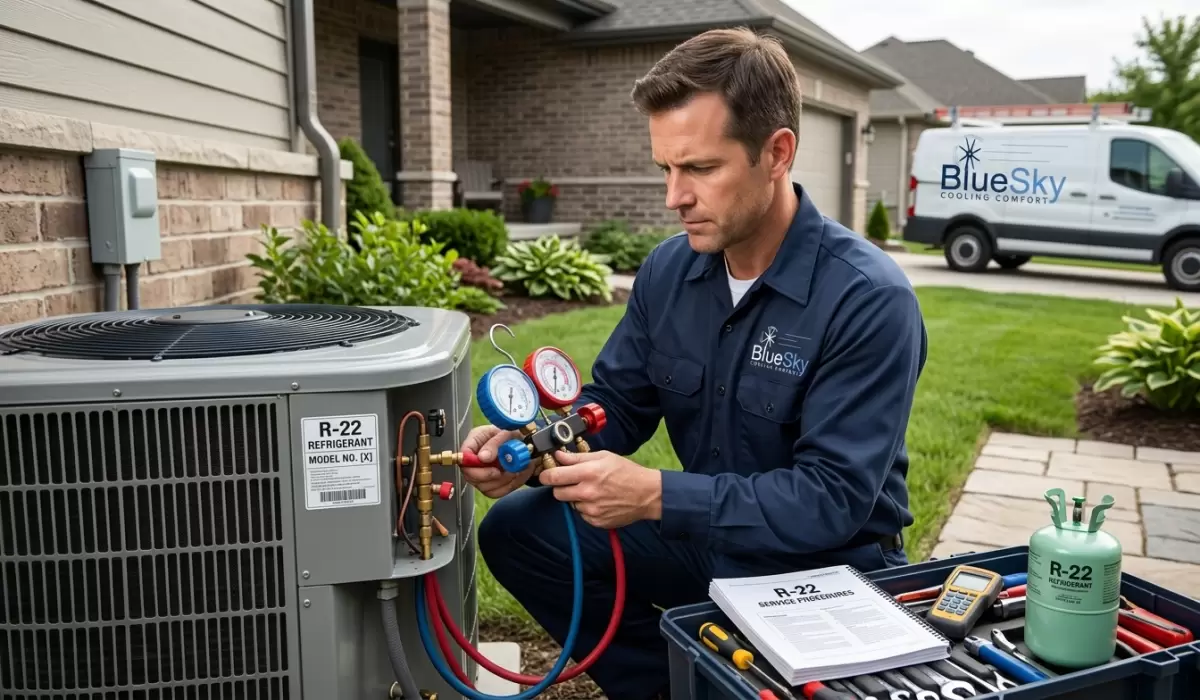
- Check the nameplate. The metal data label on your outdoor condenser lists the refrigerant. Look for "R-22" or "HCFC-22." Newer systems say "R-410A" or "R-454B."
- Check the age. If your outdoor unit is 13+ years old, it's very likely R-22.
- Ask us. When our tech is out, we'll confirm it in about thirty seconds and tell you straight.
Why Service Is More Important on an R-22 System
An R-22 unit that's low on refrigerant isn't just running weak — it's telling you something. Refrigerant doesn't get "used up" in a healthy system. If your charge is low, you have a leak. On a modern R-410A unit, that's a repair conversation. On an old R-22 unit, it's a bigger decision, because every ounce we add costs more and the leak will come back.
Regular service catches the small stuff before it turns into an emergency in the middle of a Florida August:
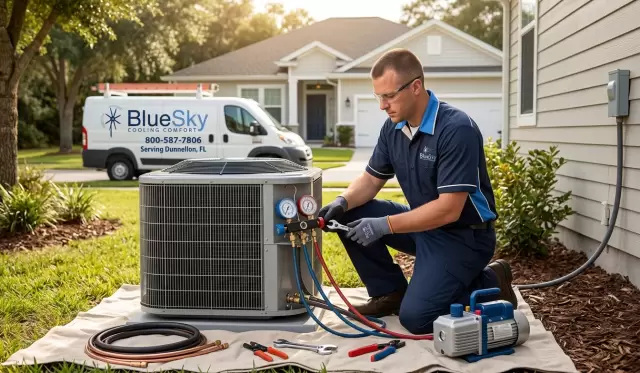
- We check refrigerant charge and pressures, so a slow leak gets flagged early instead of leaving you sweating on the hottest day.
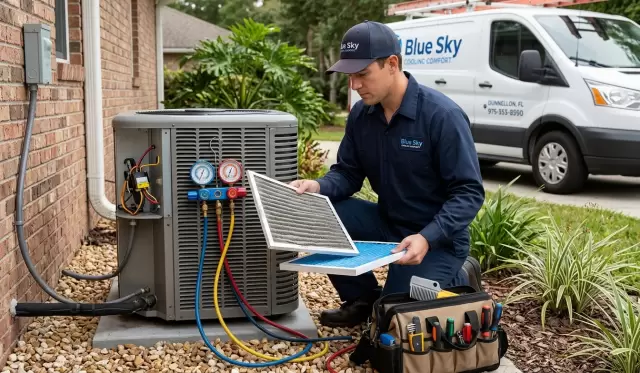
- We clean the condenser coil — Florida pollen, grass clippings, and dust choke airflow fast, and a dirty coil makes an aging compressor work even harder.
- We inspect the compressor and capacitor, the two parts most likely to fail on a tired R-22 system.
- We check the drain line for clogs. Our humidity keeps those pans full, and a backed-up line means water where you don't want it.
What Happens When an R-22 System Springs a Leak
This is the part that catches people off guard. If your compressor fails or you develop a significant refrigerant leak, you can't just swap in a modern refrigerant. R-22 and R-410A aren't interchangeable — different pressures, different oils, different components. Fixing an R-22 leak means finding R-22, and paying today's price for it.
We'll always be honest with you about the math. Sometimes a small repair keeps an older unit limping through another season, and that's a fine choice. Other times, you'd be pouring money into a system that's on borrowed time, and a new high-efficiency unit pays you back in lower power bills.
Repair or Replace? How We Think About It
There's no one-size answer, but here's the honest framework we use when we're standing in your yard:
- Lean toward repair when the system is under about 10 years old, the fix is minor, and the refrigerant charge is holding.
- Lean toward replacement when the unit is 12+ years old, the compressor is failing, you've got a real R-22 leak, and repair costs are creeping past a third of a new system.
- Think about your power bill. Older R-22 units are far less efficient than what we install today. In a Florida summer, that difference shows up on every FPL and Duke bill.
Whatever the answer, you'll get straight pricing and truthful recommendations from us — no scare tactics, no pressure. That's how we've earned a 4.9 rating across 45 reviews.
What a Service Visit Looks Like With Us
When you book an AC service, one of our NATE-certified techs shows up with a stocked truck. We'll confirm your refrigerant type, measure your charge and pressures, clean and inspect the coil, test electrical components, clear the drain line, and check your thermostat and airflow. Then we sit down and walk you through what we found — in plain English, with real numbers.
If you've got an older R-22 system, don't wait for it to quit on a 95-degree afternoon. A little attention now beats an emergency call later. And if you're already dealing with warm air, weak airflow, or a unit that won't keep up, we run emergency service across Dunnellon, Ocala, and Citrus County.
Call us at (352) 362-8525 or book online, and we'll take a look before your next heat wave rolls in.